Consultations
How a physician listens, examines, explains a diagnosis and agrees a plan with the patient.
What it is · what you learn
A clear guide for pre-med students — and their parents — to what you will see, what you will not do and what you take home.

In short
Clinical shadowing (also called physician or medical shadowing) is an observation-based experience: you accompany a doctor during real working hours to understand the daily reality of medicine before committing to it.
For U.S. applicants it answers the question every admissions committee asks: do you know what you are signing up for? Hours matter, but what you noticed and how you reflect on it matters more.
Illustrative photo
What you will see
Settings depend on the hospital, the specialty and each patient’s consent.
How a physician listens, examines, explains a diagnosis and agrees a plan with the patient.
Follow admitted patients’ progress and how the team makes decisions together.
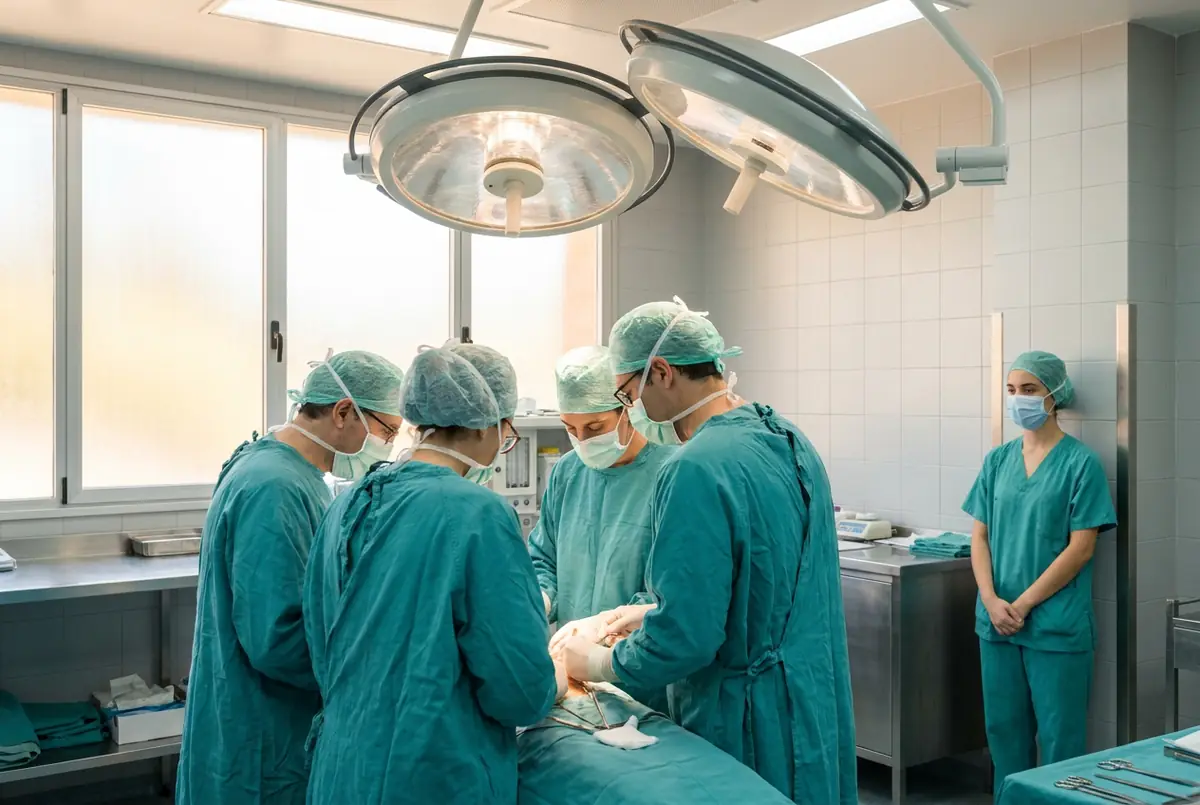
Where the hospital allows it, watch procedures from the operating room following its sterile-field rules.
Clinical sessions where doctors discuss cases and new evidence.
Referrals, primary care, private and public hospitals: the Spanish model compared with the U.S.
Communication across languages and cultures — something no textbook teaches.
Ground rules
| Shadowing | Clinical experience | |
|---|---|---|
| You | Observe and ask | Interact with patients |
| Examples | Following a physician in clinic, rounds or OR | Scribe, EMT, medical assistant, hospital volunteer |
| AMCAS | Physician Shadowing / Clinical Observation | Community Service/Volunteer – Medical/Clinical; Paid Employment – Medical/Clinical |
| Shows | You understand the physician’s role | You are comfortable caring for people |
What you take home
Questions
Shadowing is watching a physician work. Clinical experience (volunteering as a scribe, EMT or medical assistant, for example) means interacting with patients yourself. Medical schools look for both, and AMCAS lets you report them separately.
It is different. Shadowing in the U.S. shows you the system you will train in; shadowing abroad shows you how another system solves the same problems. Many applicants do both and write about the contrast.
Keep a short daily log: specialty, setting, hours, and one or two moments that made you think — never patient names or identifying details. It makes the AMCAS description and your interviews much easier.
No. It is an observation program for students who have not started medical school yet. Clinical electives for medical students are a different kind of program.